


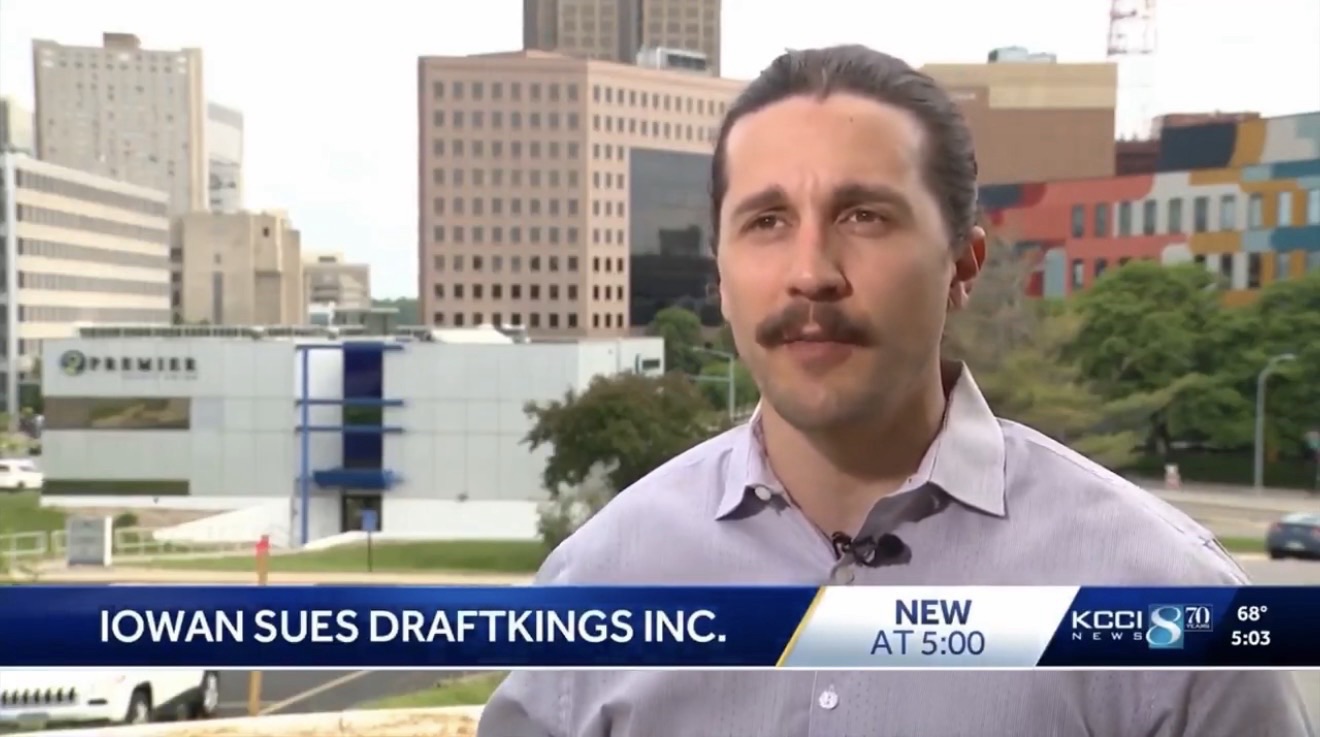
An Iowa bettor who claimed DraftKings owed him $14.2 million from the rain-shortened 2024 AT&T Pebble Beach Pro-Am has lost his case. On July 9, 2026, the court entered judgment for DraftKings and Crown IA Gaming, ending the bettor’s claims at the federal district-court level. Now the sportsbook wants him to cover its court costs.
The bill of costs is for $23,502.80, according to filings in the U.S. District Court for the Southern District of Iowa. The bill was filed July 23.
The case dates back to February 2024. As storms headed for the Monterey Peninsula, Nicholas Bavas of Dallas County, Iowa, saw a chance the final round would never be played. Per the Iowa Capital Dispatch, DraftKings was still accepting wagers on the tournament’s outcome, including parlays based on current leaderboard positions, despite the possibility of no final round.
According to the lawsuit, Bavas placed five bets between around 10 p.m. Saturday and 12:01 a.m. Sunday. The five parlays ranged in stakes from $25 to $100, totaling $325. The complaint says the displayed payouts added up to $14,204,782.26.
His $100 bet alone would have paid $4,651,571 if every pick was correct, the lawsuit claimed. The parlays were built on the tournament’s top 20 golfers.
RELATED: Matt Gogel Suspended Six Months for Gambling on PGA Tour Events
That evening, the PGA Tour announced there would be no play the next day, making the 54-hole results final. Wyndham Clark was declared the winner. Bavas’ lawsuit claimed all five of his bets won.
DraftKings voided them. Bavas alleged the company “unilaterally voided” all five bets and refunded his stakes. He wasn’t alone, as DraftKings retroactively voided all bets placed after the close of play on Feb. 3.
Many of those bettors, Bavas included, accused DraftKings of changing its house rules mid-event from 36 holes to “until the final shot.” The sportsbook pushed back that week, saying its house rules were “the same as they were at the start of this event.”
Bavas filed suit in Iowa state court in April 2025. The case moved to federal court weeks later. He sought damages for breach of contract and violations of consumer-protection laws.
His argument centered on bet type. DraftKings voided the wagers under its “Tournament Futures Winner” rule, which Bavas argued does not cover multi-player parlays. The lawsuit added that even if DraftKings could void his Clark pick, the other legs should have been recalculated and honored.
The suit also described DraftKings’ rules as a “dizzying array of interlocking sets of rules.” Attorney Ben Lynch said DraftKings’ rules at the time “did not allow them to void the bets.”
RELATED: Wyndham Clark Accused of Rules Violation During BMW Championship Win
Lynch said the rules only seemed to cut one way. “If he had lost the bet and said, ‘I want my money back because I didn’t think the weather was going to cancel things,’ DraftKings would have kept his money,” he said.
Lynch also told Covers, “I’ve yet to find one that’s worth $14 million that has been publicly filed.”
DraftKings pushed back hard. The company asserted 19 affirmative defenses, pointing to house rules Bavas agreed to that give it the right to void wagers due to errors. It maintained those rules let it void futures wagers placed after the final shot of what became the last round.
The sportsbook also argued Bavas “knowingly accepted the risk” that unforeseen circumstances could affect odds or payouts. It went further, accusing him of acting in bad faith by exploiting contract language for financial gain.
Both sides eventually asked Judge Stephen H. Locher to decide the case without a trial, filing cross-motions for summary judgment. A trial had been scheduled for September 28, 2026, but the July judgment ended the case before it got there.


