


The flop shot is one of the most satisfying shots in golf when it works. It’s also one of the most dangerous when it doesn’t. Before you start opening the face and taking a full swing at a ball sitting close to the green, there are a few things you need to understand about when to hit it, how to set up, and what the swing actually looks like.
The flop shot is not a go-to shot. It’s a last resort, or close to it.
You pull the flop shot when you have almost no green to work with, there’s something between you and the hole that you have to fly over, and you need the ball to stop fast. A bunker between you and a tight pin. A ridge that makes a bump-and-run impossible. A downhill chip where a running shot would race past the hole.
What you don’t do is hit a flop shot when a simple chip or pitch will get the job done. The flop requires a big swing with an open face on a shot that travels a short distance. The margin for error is real. A chunked flop goes nowhere. A bladed one goes everywhere. If there’s a simpler option, take it.
The other thing that matters is your lie. The flop shot requires grass under the ball. A fluffy lie in the rough is ideal. A tight lie on hardpan is a completely different situation, one where the risk of blading it skyrockets. If you don’t have a cushion of grass under the ball, think twice before opening the face.
Start with your club selection. You want a lob wedge, 58 to 62 degrees is the standard range. The higher the loft, the more help you have getting the ball up quickly. Some golfers reach for their sand wedge instead, which works too, particularly because of the bounce.
Open the clubface before you grip the club. If you grip first and then rotate the face open, the face will return to square at impact and you’ll lose the loft you’re trying to create. Set the face open first, then take your grip.
Your stance should be slightly open. Aim your feet and body left of the target for a right-handed golfer, roughly 30 to 45 degrees left. Ball position goes forward of center. Stand slightly farther from the ball than normal. The flop is a sweeping, shallow motion and getting a little more distance from the ball encourages that flat, sliding delivery.
RELATED: Why Your Iron Distance Is Inconsistent (And How to Fix It)
A lot of golfers open the face on a flop shot and immediately think about loft. What they should also be thinking about is bounce.
Bounce is the angle between the leading edge of the club and the sole. When you open the face, you’re increasing both loft and bounce. That extra bounce is what allows the club to skim through the grass instead of digging into it. It’s the difference between sliding cleanly under the ball and chunking it.
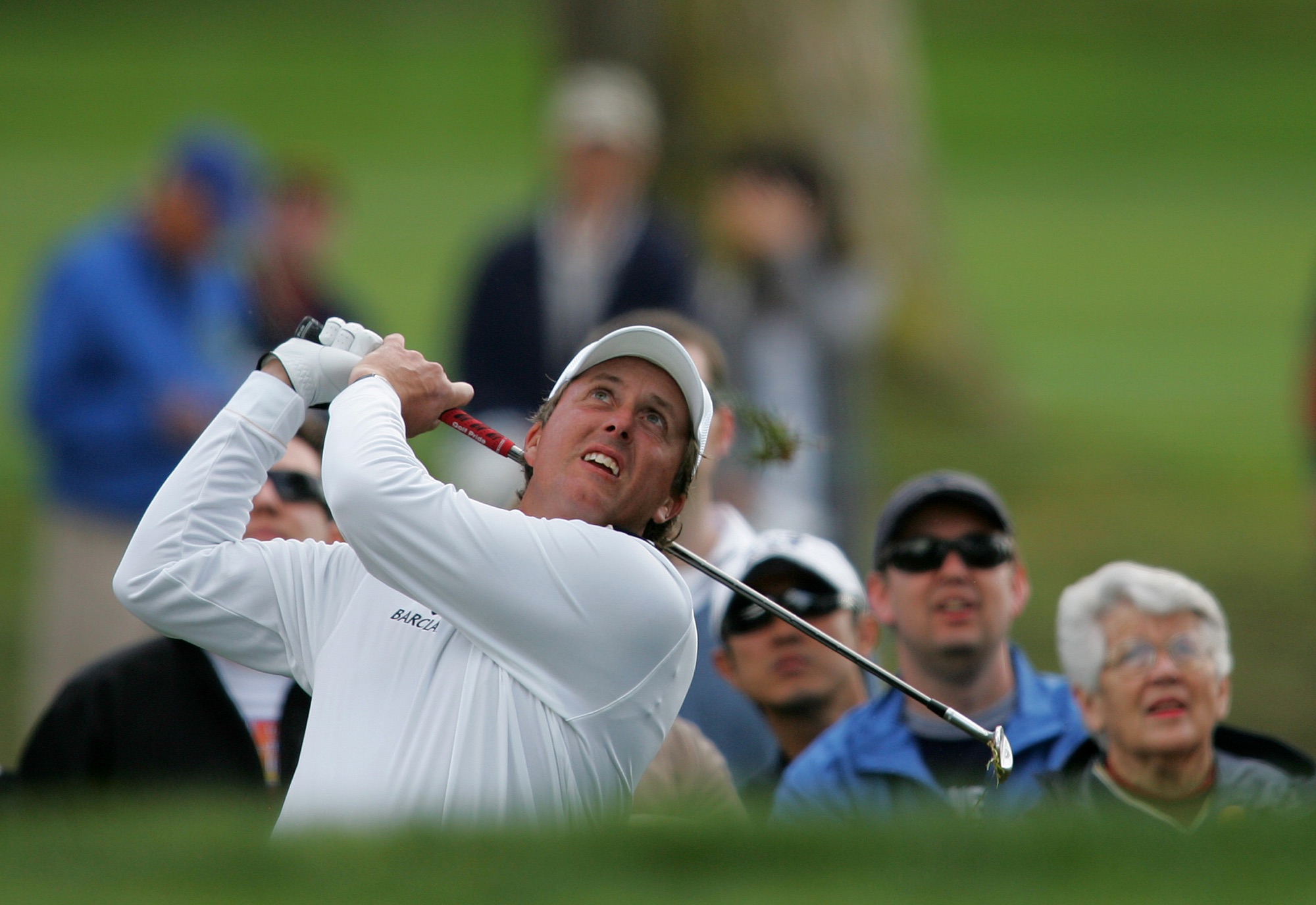
When Phil Mickelson hits a flop, he opens the face dramatically, sometimes nearly flat, specifically to maximize bounce and loft at the same time. The club glides. It doesn’t dig.
Swing along your shoulder line, not your target line. Because your body is open, your swing path will naturally go left. That’s correct. Trust it.
The motion is long and smooth. You need a full, unhurried motion to generate the speed required to get the ball up in the air over a short distance. Most golfers instinctively decelerate because they’re nervous about hitting it too far. Deceleration is what causes chunks and blades. Commit to the swing and accelerate through impact.
Let the club scrape the grass for as long as possible through the hitting zone. The longer the sole stays in contact with the turf, the more you’re using the bounce and the better the contact. Finish high, with the club well above your shoulder.
The flop shot is not something you want to attempt for the first time during a round. Find a practice green with some rough around it and spend time hitting flops from different lies, fluffy rough, slightly tighter grass, uphill and downhill. Get a feel for how far the ball carries with different swing lengths. The swing tempo stays the same. The length of the swing controls the distance.
Once you can hit it high and land it softly with some consistency, you’re ready to bring it to the course.
RELATED: How to Read Greens Like a Tour Pro


